
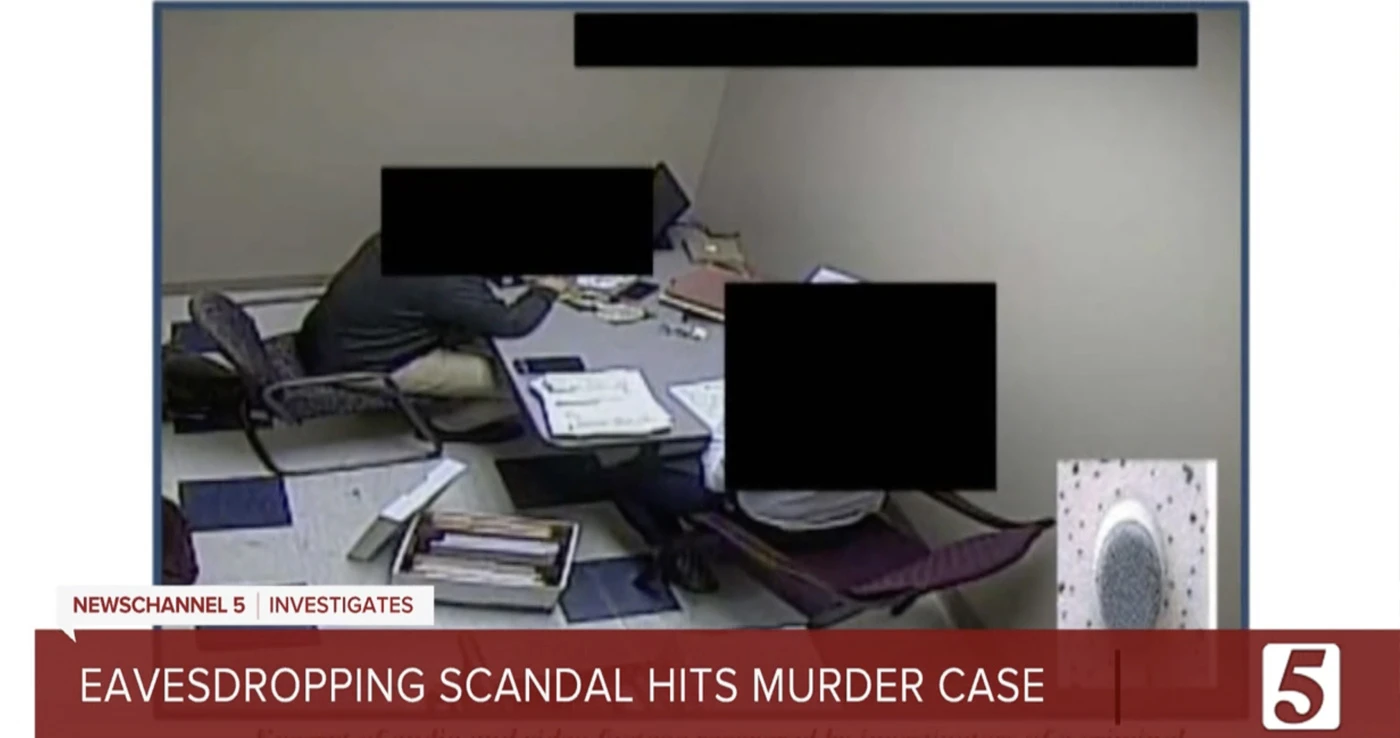
A Nashville murder case scheduled for trial took an unexpected turn when defense attorney Ben Powers filed a motion seeking to disqualify the Davidson County District Attorney’s Office from prosecuting his client, Calvin Atchison. The motion followed the release of a state investigative report examining allegations that conversations involving defense attorneys and their clients were secretly recorded inside the District Attorney’s Office.
NewsChannel 5 reported that Criminal Court Judge Cynthia Chappell agreed to postpone Atchison’s upcoming murder trial while the court considers the issues raised in the defense motion. According to court filings, Powers and his investigator were among those allegedly recorded while reviewing evidence and discussing defense strategy in Atchison’s case.
The development marked one of the first major criminal cases directly impacted by the ongoing controversy surrounding allegations of unauthorized recordings inside the Nashville District Attorney’s Office.
Read and watch on Nashville’s Channel 5 News about this case. Click here to read and watch the story on Channel 5 News.
For more information, you can also read WSMV 4’s article about this case.
Why Did Ben Powers File this Motion?
The motion filed on behalf of Calvin Atchison centers on concerns regarding attorney-client confidentiality and the integrity of the criminal justice process.
According to reporting by NewsChannel 5, Powers and private investigator Seth Carelli were directed to a room within the District Attorney’s Office in February 2023 to review discovery materials connected to Atchison’s murder case. During that review, they allegedly discussed witness information, evidence, investigative plans, and other aspects of the defense strategy.
Investigators with the Tennessee Bureau of Investigation and the Comptroller’s Office of Tennessee released a joint investigative report that included recordings of Powers and Carelli conversations from the room they reviewed discovery in. According to the motion, neither individual knew they were being recorded at the time.
Powers argued that the allegations raised serious concerns regarding his client’s constitutional rights and the fairness of the prosecution. As a result, he asked the court to remove the District Attorney’s Office from the case.
What Does It Mean to Disqualify a Prosecutor?
Disqualifying a prosecutor or an entire prosecutor’s office is an extraordinary legal remedy. Courts generally do not remove prosecutors from cases unless significant concerns exist regarding conflicts of interest, ethical issues, or circumstances that could affect the fairness of the proceedings.
A motion to disqualify is based on either actual misconduct or the appearance of serious improper conduct. Essentially, the motion asks the court to evaluate whether the circumstances are serious enough to warrant another prosecutor handling the case going forward.
In situations where removal is warranted, courts may appoint a special prosecutor or transfer responsibility to another office. The goal is to ensure public confidence in the fairness and impartiality of the criminal justice system.
Because such motions are uncommon, courts typically review them carefully before making a decision.
Why Is Attorney-Client Strategy Protected So Strongly?
One of the fundamental principles of the American legal system is that defendants must be able to communicate openly with their attorneys when preparing a defense.
Defense lawyers routinely discuss witness interviews, legal theories, investigative plans, trial strategy, and evidence with their clients and investigators. Those communications are generally protected because effective representation depends on candid and confidential conversations.
According to the motion discussed in NewsChannel 5’s reporting, Powers and Carelli allegedly spent several hours reviewing evidence, identifying potentially important documents, discussing witnesses, and evaluating defense strategy while preparing Atchison’s case.
The allegations became significant because they raised questions about whether confidential defense preparations may have been recorded without the knowledge of those involved. The District Attorney’s Office has disputed aspects of the broader controversy, and the allegations remain the subject of ongoing legal proceedings.
Regardless of the outcome, the dispute highlights the importance courts place on protecting confidential communications within the criminal justice system.
Why Did the Judge Delay the Murder Trial?
At the time of the motion, Calvin Atchison’s murder trial was scheduled to begin within days.
Judge Cynthia Chappell agreed to postpone the proceedings while the court evaluates the issues raised by the defense. According to NewsChannel 5, the judge determined that additional time was necessary before the case could move forward.
Trial delays are not uncommon when courts must address significant constitutional or procedural questions. Judges often resolve those issues before allowing a jury trial to proceed because the outcome may affect how the case is ultimately prosecuted.
In this instance, the delay allowed the court to examine whether the defense allegations require additional hearings or other action before the case can proceed.
What Happens Next in the Atchison Case?
Following the continuance, the court is expected to consider the defense motion and determine whether additional proceedings are necessary.
Potential outcomes could include further hearings, review of evidence related to the allegations, or decisions regarding whether the Davidson County District Attorney’s Office should continue prosecuting the case.
Importantly, the motion focuses on procedural and constitutional questions concerning how the case should proceed.
The court’s eventual ruling may have implications not only for Atchison’s case but also for broader discussions regarding attorney-client confidentiality and prosecutorial ethics.
Frequently Asked Questions About Prosecutor Disqualification
What Is a Motion to Disqualify a Prosecutor?
A motion to disqualify asks a court to remove a prosecutor or prosecutor’s office from a case because of a conflict of interest, ethical concern, or other issue affecting fundamental fairness.
Does Filing a Motion Mean Misconduct Has Been Proven?
No. A motion raises allegations or concerns for the court to consider. The court must evaluate the facts and determine whether any action is necessary.
Why Are Attorney-Client Communications Protected?
Confidential communications allow attorneys to provide effective legal representation and help ensure defendants receive a fair opportunity to prepare their defense.
Can a Criminal Trial Be Delayed Because of Procedural Issues?
Yes. Courts frequently address constitutional, ethical, and procedural questions before allowing a case to proceed to trial.
Experienced Tennessee Criminal Defense Representation
Complex criminal cases often involve more than the charges themselves. Constitutional issues, evidentiary disputes, and questions regarding the fairness of legal proceedings can become critical parts of a defense strategy.
Attorney Ben Powers represents individuals facing serious criminal charges throughout Tennessee and is committed to protecting the rights guaranteed to every defendant under the Constitution. Through courtroom advocacy and appearances in local and national media, Powers regularly addresses important legal issues affecting Tennessee’s criminal justice system.
If you or a loved one is facing serious criminal charges, contact Legal Powers PLLC online or call (615) 762-8775 to discuss your legal options and learn how an experienced criminal defense attorney can help protect your rights.