
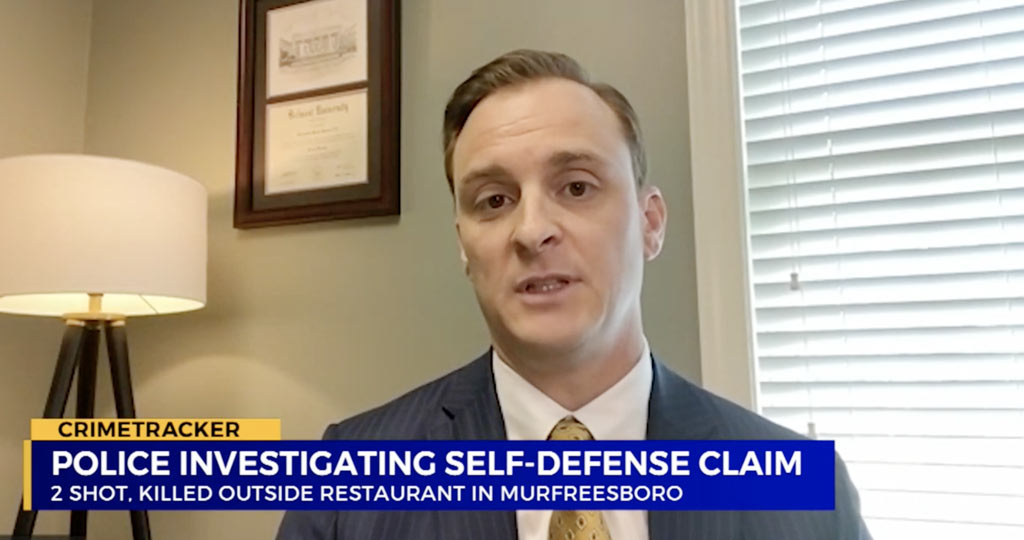
Legal Powers PLLC attorney Ben Powers analyzes Tennessee self-defense law after fatal shooting outside Murfreesboro restaurant
A fatal shooting outside a Cook Out restaurant in Murfreesboro drew significant public attention after investigators said the shooter claimed he acted in self-defense. According to police, two men were killed following an altercation in a drive-thru line after an earlier confrontation involving the same individuals at another restaurant location.
As the investigation unfolded, Nashville ABC affiliate WKRN interviewed Tennessee criminal defense attorney Ben Powers to discuss how self-defense claims work under Tennessee law and the legal issues investigators typically consider in cases involving deadly force.
According to Murfreesboro police, investigators stated that witness accounts and video evidence appeared consistent with the shooter’s initial claim that he acted to protect himself during the altercation. Authorities also noted that no charges had been filed at that stage of the investigation, while detectives continued to review the evidence.
Nashville ABC affiliate WKRN interviewed Ben Powers about this case. Click here to read and watch the story on WKRN.
What Happened in the Murfreesboro Cook Out Shooting?
According to investigators, the incident began after an encounter between the individuals involved at a McDonald’s drive-thru in Murfreesboro. Police later stated that the same individuals encountered one another again at the Cook Out restaurant on Memorial Boulevard, where another confrontation occurred.
Investigators said the two men approached the vehicle while the 21-year-old shooter was seated in the backseat. According to police, an argument escalated into a physical altercation before the shooter fired multiple shots, killing both men. Authorities later stated that the shooter claimed he acted in self-defense during the incident.
The case quickly attracted public attention because of the unusual circumstances surrounding the shooting and the immediate questions raised about Tennessee’s self-defense law. Investigators also noted that witnesses at the scene voluntarily provided statements and video evidence to detectives as part of the investigation.
During his interview with WKRN, Ben Powers discussed how self-defense investigations often depend heavily on the specific facts of the encounter, including who initiated the confrontation, whether the person claiming self-defense reasonably believed they faced imminent danger, and whether the use of force was justifiable under Tennessee law.
How Do Self-Defense Laws Work in Tennessee?
Tennessee law allows individuals to use force in certain situations when they reasonably believe it is necessary to protect themselves or another person from imminent harm. In cases involving deadly force, investigators typically examine whether the person claiming self-defense reasonably believed they faced an immediate threat of death or serious bodily injury.
As Ben Powers explained during the WKRN interview, self-defense cases are often highly fact-specific. Investigators may review witness testimony, surveillance footage, physical evidence, injuries, 911 calls, and statements made at the scene while determining whether criminal charges are appropriate.
One of the key issues in many self-defense investigations involves whether the force used was justifiable under the circumstances. Prosecutors and investigators may analyze factors such as whether the threat was ongoing, whether the individual claiming self-defense had an opportunity to retreat, and whether the response was proportionate to the perceived danger.
Tennessee’s self-defense laws can become especially complicated in fast-moving confrontations involving multiple individuals, conflicting witness accounts, or unclear timelines. Because of that, investigators often continue reviewing evidence long after the initial incident before making final charging decisions.
What Do Investigators Consider in Self-Defense Cases?
In self-defense investigations, law enforcement officers typically examine far more than just the fact that a shooting occurred. Investigators often work to reconstruct the events leading up to the confrontation and determine whether available evidence supports the self-defense claim.
As discussed during Ben Powers’ WKRN appearance, witness statements and video evidence can become especially important in cases involving public confrontations. Investigators may also evaluate physical injuries, forensic evidence, prior interactions between the individuals involved, and statements made during 911 calls or police interviews.
In the Murfreesboro case, police stated that witness accounts and evidence collected at the scene were consistent with the shooter’s claim that he had been assaulted before firing the weapon. Authorities nevertheless continued investigating the circumstances surrounding the shooting before making final determinations regarding possible charges.
Self-defense claims can also raise broader legal questions about reasonable fear, escalation of force, and whether prosecutors believe the available evidence can disprove self-defense beyond a reasonable doubt.
Frequently Asked Questions About Tennessee Self-Defense Law
Can Someone Claim Self-Defense After a Fatal Shooting in Tennessee?
Yes. Tennessee law allows individuals to claim self-defense when they reasonably believe force was necessary to protect against imminent harm or serious bodily injury.
Does Claiming Self-Defense Automatically Prevent Criminal Charges?
No. Law enforcement and prosecutors continue to investigate the circumstances of the incident to determine whether the use of force was legally justified under Tennessee law.
What Evidence Is Important in a Self-Defense Investigation?
Investigators may review witness statements, surveillance footage, physical evidence, forensic testing, injuries, 911 calls, and statements made by the individuals involved.
What Does “Reasonable Fear” Mean in a Self-Defense Case?
In general, self-defense claims often depend on whether a reasonable person in the same situation would have believed they faced an immediate threat of death or serious bodily injury.
Experienced Tennessee Criminal Defense Representation
Cases involving self-defense allegations often require careful analysis of witness testimony, forensic evidence, police investigations, and Tennessee criminal law. Through media appearances discussing high-profile criminal investigations across Tennessee, attorney Ben Powers regularly provides legal analysis on self-defense claims, violent crime investigations, and criminal procedure.
Legal Powers PLLC represents individuals facing serious criminal allegations throughout Tennessee, including homicide cases, assault charges, and self-defense-related investigations. The firm understands the importance of protecting clients’ constitutional rights and thoroughly examining the facts surrounding complex criminal cases.
If you or a loved one is under investigation or facing criminal charges involving self-defense allegations in Tennessee, contact Ben Powers and Legal Powers PLLC to discuss your legal options.
Please call (615) 762-8775 or reach out to our firm online today for a free consultation.
Legal References Used to Inform This Page
To ensure the accuracy and clarity of this page, we referenced official legal and other resources during the content development process: