
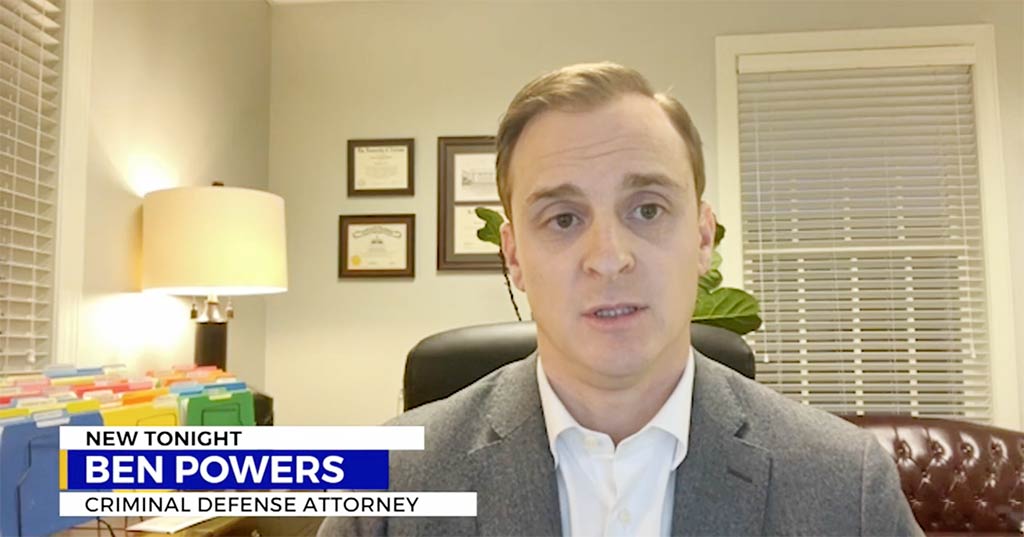
Legal Powers PLLC attorney Ben Powers provides legal analysis on witness testimony, autopsy evidence, and defense strategy in high-profile Nashville murder trial
As the murder trial surrounding the death of Nashville nurse Caitlyn Kaufman continued in Davidson County, new testimony and forensic evidence brought additional attention to one of Middle Tennessee’s most closely followed criminal cases. The proceedings drew significant local coverage as prosecutors presented witness testimony and graphic autopsy findings connected to the fatal 2020 shooting on Interstate 440.
Nashville ABC affiliate WKRN interviewed Tennessee criminal defense lawyer Ben Powers to discuss the developments in the case and provide legal analysis on the defense strategy unfolding during the trial. The segment focused on how prosecutors and defense attorneys approach serious homicide cases, including the role of witness credibility, forensic evidence, and reasonable doubt in Tennessee murder trials.
According to reporting from WKRN, testimony during the trial included statements from a key witness as well as evidence presented by the medical examiner regarding Kaufman’s injuries. The case generated widespread public interest not only because of the tragic nature of the allegations, but also because it offered a closer look at how complex homicide prosecutions are handled inside Tennessee courtrooms.
Nashville ABC affiliate WKRN interviewed Ben Powers about this case. Click here to read and watch the story on WKRN.
What Happened in the I-440 Murder Trial?
The trial centered on the 2020 shooting death of Caitlyn Kaufman, a Nashville nurse killed while driving on Interstate 440. Prosecutors alleged the shooting occurred following a road rage confrontation and presented testimony intended to connect the defendants to the crime.
During the proceedings discussed in the WKRN report, jurors heard testimony from a key witness connected to the investigation, along with evidence presented by the medical examiner regarding the victim’s injuries. The trial also involved extensive discussion surrounding the timeline of events, witness accounts, and the prosecution’s theory of what occurred on the night of the shooting.
As Ben Powers explained during his interview with WKRN, homicide trials often involve highly detailed testimony and emotionally difficult evidence. Prosecutors typically work to build a narrative that ties together witness testimony, forensic findings, electronic evidence, and investigative conclusions in an effort to prove guilt beyond a reasonable doubt.
At the same time, defense attorneys may focus on identifying weaknesses or inconsistencies in the prosecution’s case. That can include challenging witness credibility, questioning the reliability of evidence, disputing investigative conclusions, or arguing that prosecutors have not met the high burden required for a criminal conviction.
How Prosecutors Build Murder Cases in Tennessee
In Tennessee homicide cases, prosecutors have the burden of proving every element of the charged offense beyond a reasonable doubt. Depending on the allegations, that may involve proving intent, premeditation, recklessness, or another required mental state under Tennessee law.
To do that, prosecutors often rely on a combination of evidence rather than a single piece of proof. Witness testimony, surveillance footage, phone records, forensic analysis, autopsy findings, ballistic evidence, and digital evidence may all become part of the prosecution’s case during a murder trial.
As discussed during the WKRN interview with Ben Powers, prosecutors also frequently attempt to establish a timeline that helps jurors understand how they believe the events unfolded. In high-profile cases, jurors are often asked to evaluate large amounts of evidence presented over days or even weeks of testimony.
Murder trials can also involve emotionally difficult evidence, including graphic photographs, medical examiner testimony, and detailed descriptions of injuries. Prosecutors may use that evidence to support their theory of the case and explain the circumstances surrounding the victim’s death.
How Defense Attorneys Challenge Evidence in Homicide Trials
Defense attorneys play a critical role in testing the prosecution’s evidence throughout a criminal trial. In Tennessee murder cases, the defense is not required to prove innocence. Instead, prosecutors carry the burden of proving guilt beyond a reasonable doubt.
Because of that standard, defense attorneys often focus on examining whether witness testimony is reliable, whether investigators followed proper procedures, and whether the evidence fully supports the prosecution’s theory. Cross-examination can become especially important when witness recollections conflict or when testimony changes over time.
During his WKRN interview, Ben Powers discussed the defense’s strategy in the I-440 murder trial and how defense attorneys may attempt to challenge aspects of the prosecution’s case before the jury. In many homicide trials, the defense may question witnesses’ credibility, dispute forensic conclusions, or argue that the available evidence leaves unanswered questions.
The outcome of a criminal trial can depend on how jurors evaluate the credibility of testimony and the strength of the evidence presented in court. Even in high-profile cases that receive substantial media attention, prosecutors must still meet the constitutional burden required for a criminal conviction.
Frequently Asked Questions About Tennessee Murder Trials
What Must Prosecutors Prove in a Tennessee Murder Trial?
Prosecutors must prove every element of the charged offense beyond a reasonable doubt. Depending on the charge, that may include proving intent, premeditation, recklessness, or another required mental state under Tennessee law.
What Role Does Witness Testimony Play in Homicide Cases?
Witness testimony can become a major part of a homicide prosecution. Prosecutors and defense attorneys may both focus heavily on witness credibility, inconsistencies in testimony, and how jurors interpret statements made during the trial.
Can Someone Be Convicted Based on Circumstantial Evidence?
Yes. Tennessee courts allow prosecutors to rely on circumstantial evidence in criminal cases. Jurors may consider the totality of the evidence presented during trial when reaching a verdict.
Why Do Murder Trials Include Graphic Evidence?
Prosecutors may introduce autopsy findings, medical testimony, photographs, or forensic evidence to help establish how a death occurred and support their theory of the case. Courts may still limit evidence if a judge determines it would be unfairly prejudicial.
Experienced Tennessee Criminal Defense Representation
Serious felony charges and homicide investigations often involve complicated legal issues, extensive forensic evidence, and high-stakes courtroom proceedings. Through media appearances discussing major criminal cases across Tennessee, attorney Ben Powers regularly provides legal analysis on criminal investigations, trial strategy, and courtroom procedure.
Legal Powers PLLC represents individuals facing serious criminal charges throughout Tennessee, including homicide allegations, violent crimes, and other felony offenses. The firm understands the importance of thorough case preparation, strategic defense planning, and the protection of the accused’s rights at every stage of the legal process.
If you or a loved one is facing serious criminal allegations in Tennessee, contact the firm online or call (615) 762-8775 to discuss your legal options during a free consultation.
Legal References Used to Inform This Page
To ensure the accuracy and clarity of this page, we referenced official legal and other resources during the content development process: