
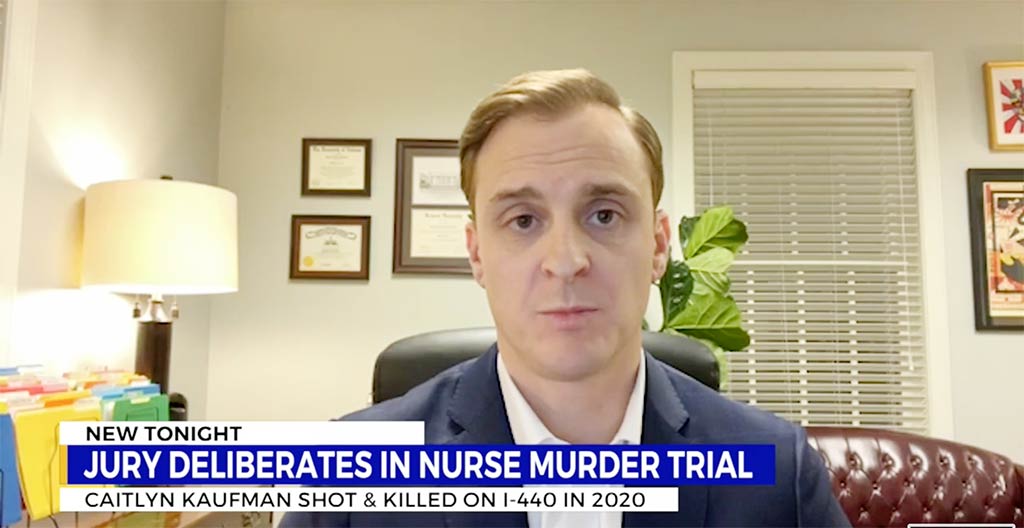
Legal Powers PLLC attorney Ben Powers analyzes jury deliberations, premeditation, and the challenges jurors face in high-profile Tennessee murder trials
After weeks of testimony in the murder trial surrounding the death of Nashville nurse Caitlyn Kaufman, jurors were tasked with one of the most important phases of any criminal case: deliberations. Following the closing arguments, the jury began reviewing the evidence and determining whether prosecutors had proven the allegations beyond a reasonable doubt, including whether the killing was premeditated under Tennessee law.
Nashville ABC affiliate WKRN interviewed Tennessee criminal defense attorney Ben Powers to discuss what typically happens during jury deliberations in a homicide case and the legal issues jurors must weigh before reaching a verdict. The case continued to draw significant public attention because of the emotional testimony, forensic evidence, and legal questions raised throughout the trial.
According to WKRN’s reporting, jurors deliberated for several hours before being sent home for the evening to continue discussions at a later time. One of the central issues facing the jury was whether prosecutors had presented sufficient evidence to establish premeditation, a key element in many first-degree murder cases under Tennessee law.
Nashville ABC affiliate WKRN interviewed Ben Powers about this case. Click here to read and watch the story on WKRN.
What Happens During Jury Deliberations in a Tennessee Murder Trial?
Jury deliberations begin after both sides finish presenting evidence and attorneys deliver their closing arguments. At that point, jurors are responsible for reviewing the testimony, examining the evidence presented during trial, and determining whether prosecutors proved the charges beyond a reasonable doubt.
As Ben Powers explained during his WKRN interview, deliberations in homicide cases can be especially complex because jurors must carefully analyze large amounts of evidence, conflicting testimony, and detailed legal instructions provided by the judge. In high-profile trials, jurors may spend hours or even days discussing witness credibility, forensic evidence, timelines, and the arguments presented by both the prosecution and defense.
Unlike television portrayals of criminal trials, deliberations are often slow and methodical. Jurors may request to review testimony, examine exhibits again, or ask questions about the legal instructions governing the case. Their role is not to speculate about what may have happened, but to determine whether the evidence presented in court satisfies the legal standard required for a criminal conviction.
What Does Premeditation Mean Under Tennessee Law?
One of the major legal questions discussed during the WKRN coverage involved whether prosecutors had established premeditation. Under Tennessee law, premeditation generally refers to the intent to kill formed before the act itself, even if the decision occurred only moments beforehand.
Proving premeditation often becomes one of the most heavily contested issues in a murder trial because prosecutors typically must rely on circumstantial evidence to establish a defendant’s state of mind. Jurors may consider factors such as prior statements, the nature of the incident, actions before or after the alleged offense, and other surrounding circumstances.
As discussed during Ben Powers’ interview, defense attorneys frequently challenge whether the prosecution has truly proven premeditation beyond a reasonable doubt. In some cases, the defense may argue that the evidence supports a lesser offense or that prosecutors have relied too heavily on assumptions rather than direct proof of intent.
The question of premeditation can significantly affect the potential outcome of a homicide case because different homicide charges in Tennessee carry dramatically different penalties and sentencing consequences.
Why Closing Arguments Matter in Criminal Trials
Closing arguments give prosecutors and defense attorneys a final opportunity to explain their interpretation of the evidence before jurors begin deliberating. Attorneys often use closing arguments to highlight witness testimony, challenge inconsistencies, and reinforce the themes they believe support their case.
In homicide prosecutions, closing arguments may focus heavily on intent, credibility, forensic evidence, and reasonable doubt. Prosecutors typically work to present a clear narrative explaining why they believe the evidence proves guilt, while defense attorneys may emphasize unanswered questions, conflicting testimony, or weaknesses in the investigation.
As Ben Powers noted during the WKRN segment, jurors often leave closing arguments with competing interpretations of the same evidence. The deliberation process then becomes an effort to determine which interpretation is most consistent with the evidence presented during the trial.
Frequently Asked Questions About Tennessee Murder Trials
What Is Premeditated Murder in Tennessee?
Premeditated murder generally involves the intentional killing of another person after the intent to kill was formed prior to the act. Prosecutors must prove premeditation beyond a reasonable doubt.
How Long Can Jury Deliberations Last in a Murder Trial?
There is no fixed timeline for jury deliberations. Depending on the complexity of the evidence and the issues involved, deliberations may last several hours, several days, or longer.
What Happens If Jurors Cannot Reach a Verdict?
If jurors cannot reach a unanimous verdict, the court may declare a hung jury, which may result in a mistrial on some or all charges.
Why Are Closing Arguments Important in Criminal Cases?
Closing arguments allow attorneys to summarize the evidence, challenge opposing arguments, and explain why they believe the jury should reach a particular verdict based on the law and testimony presented during trial.
Experienced Tennessee Criminal Defense Representation
Serious felony cases often involve complicated legal issues, extensive courtroom proceedings, and high-stakes jury deliberations. Through media appearances discussing major criminal trials and investigations across Tennessee, attorney Ben Powers regularly provides legal analysis on homicide prosecutions, criminal procedure, and trial strategy.
Legal Powers PLLC represents individuals facing serious criminal charges throughout Tennessee, including homicide and other major felony offenses. The firm understands the importance of strategic case preparation, careful trial advocacy, and the protection of clients’ constitutional rights at every stage of the criminal justice process.
If you or a loved one is facing serious criminal allegations in Tennessee, contact Ben Powers and Legal Powers PLLC to discuss your legal options.
Send an online message or call (615) 762-8775 today for a free consultation.
Legal References Used to Inform This Page
To ensure the accuracy and clarity of this page, we referenced official legal and other resources during the content development process: