
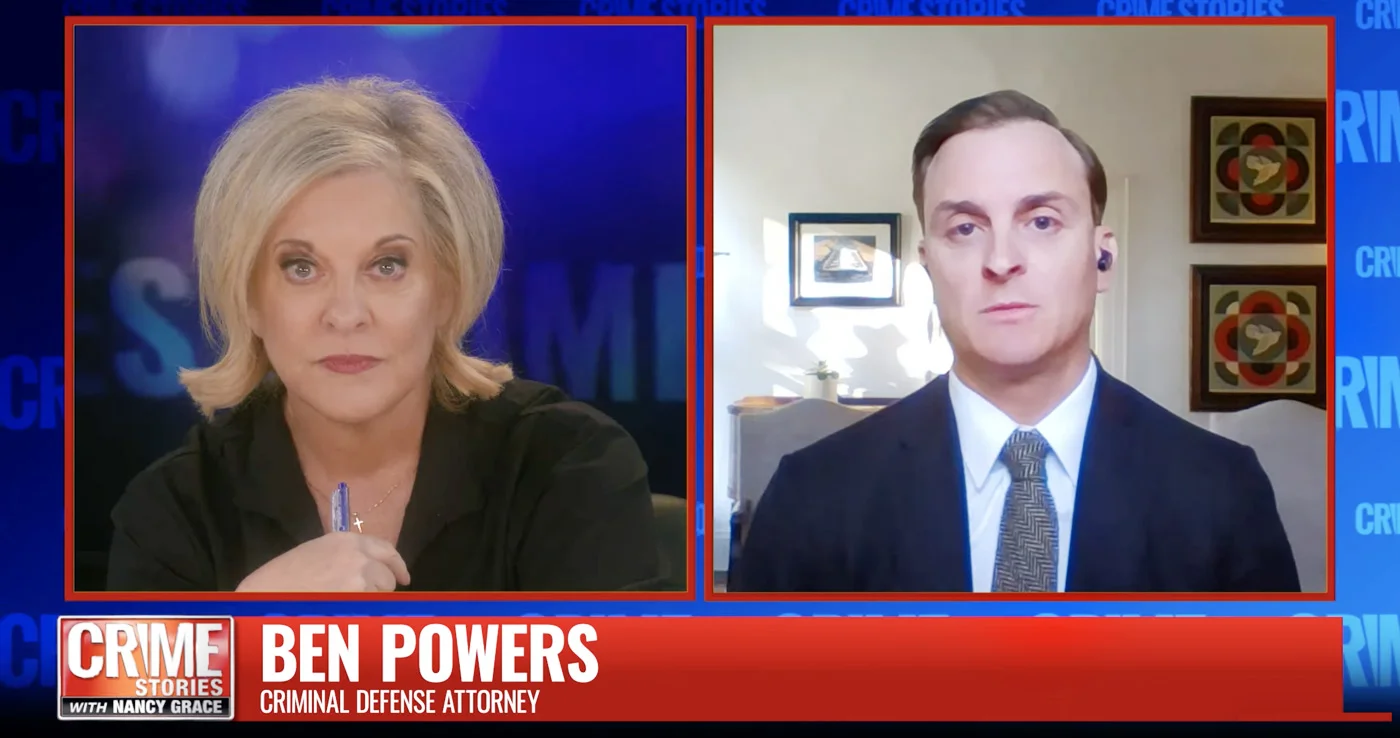
Legal Powers PLLC attorney analyzes evidence tampering allegations, digital evidence, and the latest developments in the investigation into Suzanne Simpson’s disappearance
As the search for missing Texas realtor Suzanne Simpson continued, investigators faced a major setback when an extensive landfill search was called off without locating her remains. At the same time, new criminal charges and allegations of evidence tampering added another layer of complexity to an investigation that had already drawn national attention.
To discuss these developments, criminal defense attorney Ben Powers returned to Crime Stories with Nancy Grace to provide legal analysis on the evolving case. During the episode, Powers discussed the significance of newly filed charges, the role that digital evidence may play in the investigation, and how investigators often use cell phone and location data to reconstruct a suspect’s movements.
The discussion came as authorities continued searching for answers regarding Suzanne Simpson’s disappearance and examined evidence connected to her husband, Brad Simpson, and other individuals alleged to have assisted him after Suzanne was reported missing.
Watch his interview here on YouTube, or you can listen to the show at any of your favorite platforms for listening to podcasts:
Full Episode:
Clips:
- YouTube
- X – clip 1
- X – clip 2
- X – clip 3
- X – clip 4
- Facebook – clip 1
- Facebook – clip 2
- Facebook – clip 3
What New Developments Emerged in the Suzanne Simpson Case?
One of the biggest developments discussed during the broadcast involved the suspension of a large-scale landfill search that investigators had hoped would provide critical evidence in the case. Despite extensive efforts, authorities were unable to locate Suzanne Simpson during the search operation.
The episode also focused on newly filed charges involving Brad Simpson’s longtime friend and business associate, James Cotter. According to reports discussed during the broadcast, investigators alleged Cotter assisted in hiding a firearm connected to Simpson. Cotter was subsequently charged with evidence tampering, while additional allegations involving Brad Simpson were also discussed during the investigation.
These developments represented a significant shift in the case because investigators were no longer focused solely on Suzanne Simpson’s disappearance. Instead, the investigation had expanded into several areas, including evidence, firearms, and the actions of individuals connected to the case.
How Can Multiple Investigations Exist at the Same Time?
One key observation Ben Powers made during the Crime Stories discussion was that investigators may be conducting multiple investigations simultaneously.
While much of the public attention remained focused on Suzanne Simpson’s disappearance, Powers explained that investigators appeared to be pursuing separate lines of inquiry involving firearms offenses and alleged evidence tampering. In complex criminal matters, it is not unusual for law enforcement agencies to investigate multiple potential crimes arising from the same set of events.
Different agencies may also become involved depending on the nature of the allegations. A missing-person investigation may proceed alongside separate investigations into firearms violations, obstruction of justice, evidence tampering, or other offenses. Each investigation may involve different evidence, different legal standards, and different charging decisions.
Understanding that distinction can be important because developments in one investigation do not always provide immediate answers regarding another. As Powers explained during the broadcast, investigators often review all available evidence to determine exactly what occurred.
How Can Cell Phone Data and GPS Evidence Help Investigators?
A major portion of Powers’ analysis focused on the role digital evidence may play in a modern criminal investigation. According to Powers, investigators likely have access to significant amounts of electronic data that may help them reconstruct movements and establish timelines.
Cell phone records, GPS data, vehicle location information, text messages, and other electronic records can provide investigators with valuable information about where individuals traveled and when. In many cases, this data can help law enforcement narrow search areas, identify locations that require further investigation, or verify witness statements.
Powers explained that if investigators have access to relevant devices and records, they may be able to establish movement patterns during critical periods. That information can help create boundaries and parameters for search efforts, allowing investigators to focus resources on specific geographic areas rather than searching blindly.
Modern criminal investigations increasingly rely on digital evidence because electronic records often provide objective information that can either support or contradict witness accounts. While digital evidence does not always provide all the answers, it frequently becomes an important tool for helping investigators piece together events.
What Is Evidence Tampering?
Allegations of evidence tampering became a significant focus of the episode amid charges against James Cotter.
Generally speaking, evidence tampering involves conduct intended to conceal, alter, destroy, or otherwise interfere with evidence relevant to a criminal investigation. Prosecutors must prove specific elements depending on the applicable law and the facts of the case.
During the broadcast, panelists discussed allegations that a firearm connected to Brad Simpson had been hidden and later discovered by investigators. Those allegations remain part of the broader criminal investigation.
Evidence tampering charges are grave accusations because investigators rely on the availability of evidence to determine what occurred. When authorities believe evidence has been concealed or moved, additional criminal charges may follow regardless of the ultimate outcome of the primary investigation.
Why Do Search Areas Change During Missing Person Investigations?
The conclusion of the landfill search led many observers to wonder why investigators would shift resources to different locations.
In reality, search efforts often evolve as investigators gather new evidence. Information obtained from witness interviews, digital records, surveillance footage, forensic analysis, and search results can all influence where authorities focus their attention next.
As investigators develop a better understanding of a person’s movements or uncover new leads, they may expand, narrow, or redirect search efforts. That does not necessarily indicate that prior searches were unsuccessful or misguided. Instead, it often reflects the reality that investigations are constantly adapting to new information.
The Suzanne Simpson investigation illustrates how search strategies can change as evidence develops and investigators work to determine the most productive areas to examine.
Frequently Asked Questions About Digital Evidence in Criminal Investigations
Can Cell Phone Data Be Used in Criminal Investigations?
Yes. Investigators frequently use cell phone records, location data, text messages, and call records when investigating criminal allegations.
What Is GPS Evidence?
GPS evidence consists of location information collected from phones, vehicles, navigation systems, or other electronic devices that may help establish where a person traveled.
What Is Evidence Tampering?
Evidence tampering generally involves intentionally hiding, altering, destroying, or interfering with evidence that may be relevant to a criminal investigation.
Why Do Search Areas Change During Missing Person Cases?
Investigators often adjust search efforts as new information becomes available through witness interviews, forensic testing, digital evidence, and other investigative methods.
Experienced Tennessee Criminal Defense Representation
Complex criminal investigations frequently involve evolving evidence, multiple agencies, and difficult legal questions. Through his appearances on Crime Stories with Nancy Grace and other national media outlets, attorney Ben Powers provides legal insight into some of the country’s most closely followed criminal cases while helping the public better understand how criminal investigations unfold.
At Legal Powers PLLC, Ben Powers represents individuals facing serious criminal allegations and protects his clients’ constitutional rights at every stage of the legal process. From investigating evidence to challenging the prosecution’s case, he understands the importance of a thorough and strategic defense.
If you or a loved one is facing criminal charges, contact our firm online or call (615) 762-8775 to discuss your legal options and learn how an experienced Tennessee criminal defense attorney can help.
Legal References Used to Inform This Page
To ensure the accuracy and clarity of this page, we referenced official legal and other resources during the content development process: