
Legal Powers attorney discusses witness credibility, investigative evidence, and key legal issues in high-profile missing person case
The disappearance of Texas mother of four Suzanne Simpson drew national attention after she vanished following an evening with her husband at a private San Antonio-area club. As investigators searched for answers, the case generated intense media coverage, extensive search efforts, and growing public interest in the evidence being developed by law enforcement.
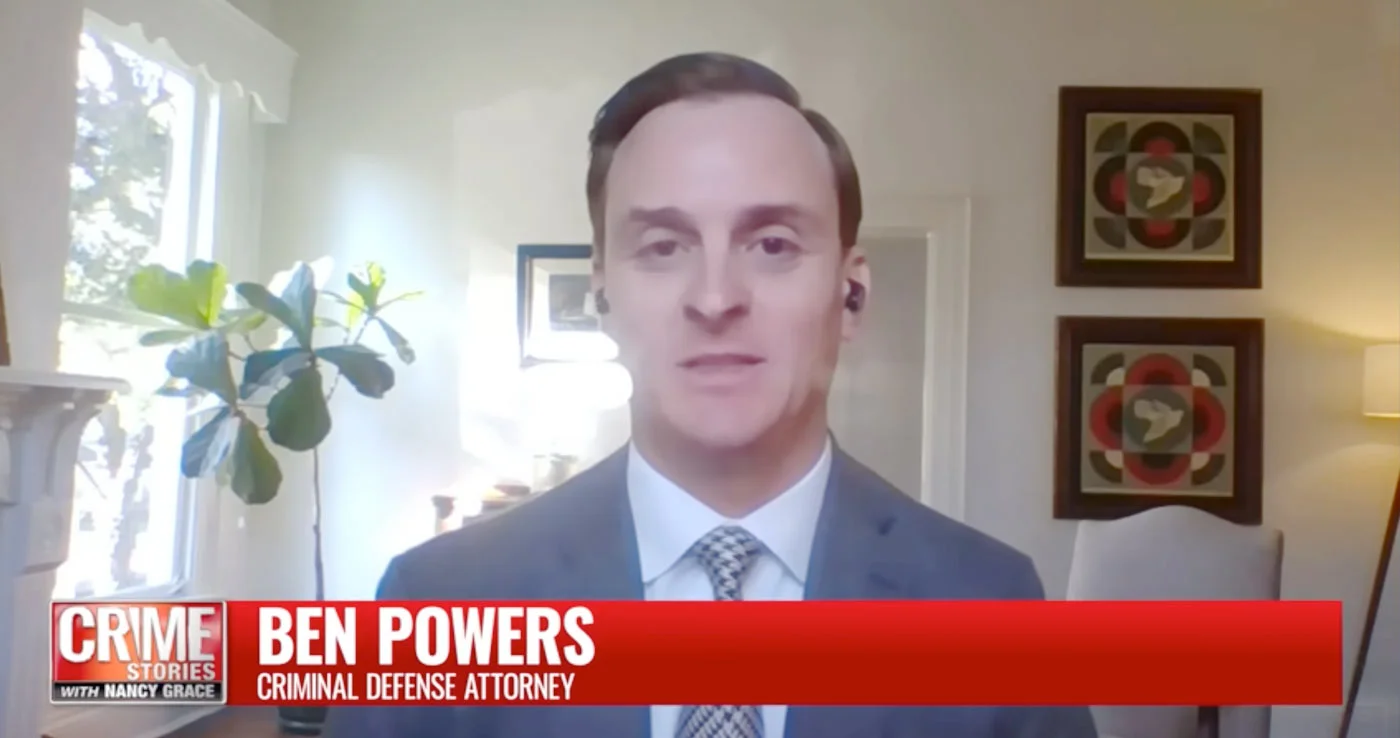
To provide insight into the investigation, Nancy Grace invited Tennessee criminal defense attorney Ben Powers to join Crime Stories with Nancy Grace. During the nationally broadcast program, Powers provided legal analysis of witness testimony, investigative procedures, and evidentiary issues that frequently arise in missing-person investigations.
At the time of the broadcast, investigators were reviewing surveillance footage, witness statements, digital evidence, and information gathered through multiple search operations. Questions surrounding Suzanne Simpson’s last known movements, a nearby witness’s observations, and the ongoing search for evidence became central topics of discussion as authorities continued to work to determine exactly what happened.
Watch his interview here on YouTube, or you can listen to the show on any of your favorite platforms for listening to podcasts:
What Happened Before Suzanne Simpson Disappeared?
According to reports discussed during the Crime Stories broadcast, Suzanne Simpson was last seen after attending an event with her husband at The Argyle, a private club in the San Antonio area. Investigators later focused on events that allegedly occurred after the couple returned home.
Public reporting indicated that a nearby resident reported hearing an argument and later claimed to have observed portions of an altercation outside the home. The witness eventually provided investigators with information about what he allegedly saw and heard that evening, including reports of screams from a nearby wooded area.
The investigation quickly expanded beyond the immediate neighborhood. Law enforcement agencies conducted extensive searches, executed search warrants, examined digital evidence, and later searched areas that investigators believed could contain evidence relevant to the case. As the search intensified, public attention increasingly focused on the witness accounts and the timeline investigators were attempting to establish.
During the Crime Stories interview, Ben Powers discussed several legal and evidentiary challenges that frequently arise when investigators must rely heavily on witness observations while continuing to gather physical and digital evidence.
How Defense Attorneys Evaluate Eyewitness Testimony
Eyewitness testimony often carries significant weight in both investigations and criminal trials. However, defense attorneys know how to carefully evaluate the reliability of witness observations, particularly when those observations become central to the prosecution’s theory of a case.
As Ben Powers discussed during the Crime Stories interview, attorneys frequently examine factors that can influence a person’s ability to perceive and recall events accurately. These factors may include distance, lighting conditions, stress, distractions, environmental obstacles, and the time elapsed between the event and the witness’s statement.
In high-profile investigations, witness accounts can quickly become part of the public narrative. Yet investigators and attorneys alike understand that memory is not always perfect. For that reason, eyewitness testimony is often compared against objective evidence such as surveillance footage, cell phone records, location data, forensic findings, and other independently verifiable information.
This process is particularly important in cases involving alleged altercations or events that occur at night. Even honest witnesses may perceive the same event differently depending on their vantage point or the circumstances under which they observed it. As a result, courts generally allow attorneys to thoroughly question witnesses about what they observed, how they observed it, and whether their recollections have changed over time.
The goal is not to attack witnesses personally. Rather, it is to ensure that any conclusions drawn from eyewitness testimony are supported by reliable evidence and careful investigation.
Why Missing Person Investigations Often Receive Intense Public Attention
Few investigations generate as much public interest as missing person cases. Unlike many criminal investigations, missing person cases often unfold in real time, with families, law enforcement agencies, volunteers, and the public all searching for answers simultaneously. As new information emerges, media coverage can quickly expand beyond the local community and attract national attention.
The Suzanne Simpson investigation became one of those cases. Search efforts, witness reports, and developments in the investigation were widely discussed across television, online news outlets, and social media platforms. Public interest often increases when key facts remain unknown, particularly when investigators continue working to determine exactly what occurred.
During his appearance on Crime Stories with Nancy Grace, Ben Powers discussed the case from a legal perspective rather than speculating. In high-profile investigations, attorneys often remind the public that investigations are driven by evidence, not assumptions. While public attention can help keep a case in the spotlight, investigators and attorneys must ultimately rely on witness testimony, physical evidence, and forensic findings rather than public opinion.
Cases like Suzanne Simpson’s illustrate the challenges investigators face when conducting a complex investigation under intense public scrutiny. At the same time, they demonstrate why careful evidence gathering and thorough legal analysis remain essential throughout the investigative process.
Frequently Asked Questions About Missing Person Investigations
How Reliable Is Eyewitness Testimony?
Eyewitness testimony can be valuable, but investigators and attorneys often compare witness accounts with physical evidence, digital records, and other sources to assess reliability.
Why Do Investigators Focus So Heavily on Timelines?
Timelines help investigators understand a person’s movements, identify potential witnesses, and determine what evidence may be relevant to the investigation.
Can Someone Be Charged with a Crime If the Body Has Not Been Found?
In some circumstances, prosecutors may pursue charges without recovering a body if sufficient evidence exists. However, these cases often involve extensive investigation and significant evidentiary challenges.
What Types of Evidence Are Most Important in Missing Person Cases?
Investigators may rely on surveillance footage, cell phone records, witness statements, financial transactions, forensic evidence, digital communications, and physical evidence gathered during searches.
Experienced Tennessee Criminal Defense Representation
Complex criminal investigations often involve disputed facts, witness testimony, digital evidence, and significant public attention. Through appearances on national programs such as Crime Stories with Nancy Grace, attorney Ben Powers regularly provides legal analysis on high-profile investigations and the legal principles that shape criminal cases.
Legal Powers PLLC represents individuals facing serious criminal allegations throughout Tennessee and understands the importance of carefully evaluating evidence, protecting constitutional rights, and ensuring that every client receives a vigorous defense.
If you or a loved one is facing a criminal investigation or serious criminal charges in Tennessee, send us an online message or call (615) 762-8775 to discuss your legal options and learn how an experienced defense attorney can help protect your rights.
Legal References Used to Inform This Page
To ensure the accuracy and clarity of this page, we referenced official legal and other resources during the content development process: