
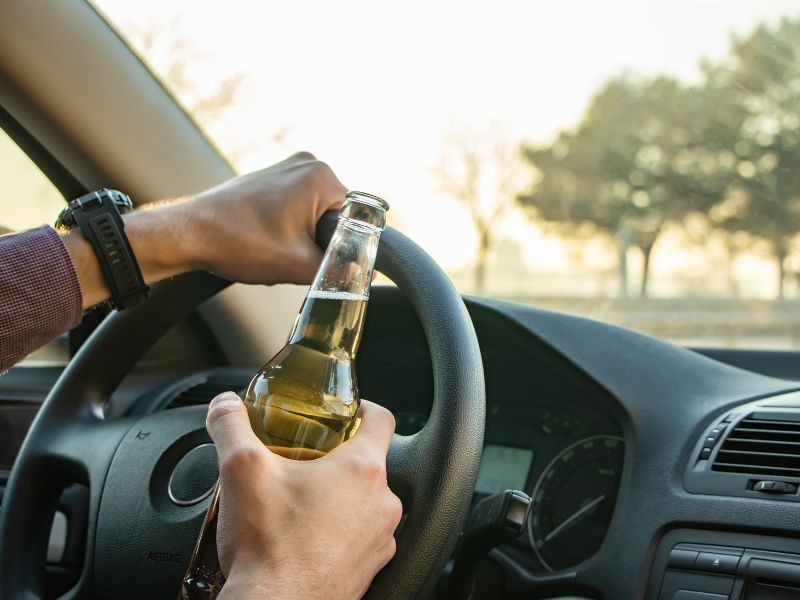
A DUI stop in Tennessee rarely starts like a courtroom drama. It may begin after dinner, a Preds game, a wedding, or a late drive home on I-65 when blue lights appear behind you. Now you’re searching for how to beat a DUI charge in Tennessee because you need more than panic and internet guesses.
Below, our experienced Tennessee DUI lawyers explain where DUI cases can break down, what evidence matters most, and how an effective defense strategy starts with the facts.
Get in touch with us online or call (615) 762-8775 today for a free case review.



Can You Beat a DUI Charge in Tennessee?
You can beat a DUI charge in Tennessee when the State cannot prove the legal elements, the stop was unlawful, the testing was unreliable, or key evidence should be excluded.
How to beat a DUI charge in Tennessee depends on details—where you were, what the officer saw, what tests were used, how the arrest happened, and whether the State can link the evidence to actual impairment.
1. Was There a Legal Reason for the Stop?
A DUI defense often starts before the officer ever reaches the window. Police generally need a lawful basis to stop your vehicle, such as a traffic violation, collision investigation, or suspicion of impairment.
This matters because a weak stop can taint what comes next. Your defense lawyer may review dash camera footage, dispatch notes, body camera video, and the officer’s report to determine whether the officer based your stop on facts or assumptions.
If the stop was unlawful, the court may suppress any evidence gathered afterward, changing the State’s leverage.
2. Did the Officer Have Enough Evidence to Expand the Stop?
A valid traffic stop does not automatically justify a DUI investigation. An officer may stop you for speeding, but they still need additional observations to justify extending the stop into a DUI inquiry.
Common clues include:
- Red eyes,
- Slurred speech,
- Odor of alcohol,
- Fumbling with documents,
- Admissions to drinking, or
- Open containers.
But those clues are not always as strong as they seem. Red eyes may come from allergies. Nervousness is normal when police stop someone. Odor doesn’t prove how much someone drank or whether they were impaired.
A strong DUI defense strategy separates normal human behavior from evidence of unsafe driving.
3. Were the Field Sobriety Tests Done Correctly?
Field sobriety tests can be challenged when they were poorly explained, poorly demonstrated, or conducted under unfair conditions. Officers must typically follow standardized testing protocols, and small deviations can make a difference.
Several issues can affect test reliability, including:
- Uneven pavement, poor lighting, rain, gravel, traffic noise, or flashing patrol lights;
- Medical conditions, injuries, footwear, age, balance issues, or anxiety;
- Confusing instructions or rushed demonstrations; and
- Officer scoring errors or conclusions that do not match the video.
A person can “fail” a roadside test for reasons that have little to do with alcohol or drugs.
4. Was the Breath Test Reliable?
Breath tests can be challenged when the machine, operator, observation period, calibration, or testing process raises questions. A breath number may look final, but the defense shouldn’t treat it like magic.
Possible issues your defense may examine include if:
- The officer followed the required procedures,
- The device was properly maintained,
- The result matched the timing of driving,
- Mouth alcohol contaminated the sample,
- Multiple results were consistent, and
- The test record shows irregularities.
This is where fighting a DUI becomes technical. The goal is not to argue with science but to test whether the State correctly applied its science.
5. Was the Blood Test Lawfully Obtained and Properly Handled?
Blood tests can provide strong evidence, but they also come with legal and scientific requirements. Tennessee law allows breath, blood, and oral fluid tests in specific situations, including implied consent, certain arrests, and some emergency circumstances.
Our team may examine:
- Whether police had probable cause before requesting or seeking the test;
- Whether consent was valid or the police properly obtained a warrant;
- Who drew the blood and whether they were qualified;
- How quickly the sample was collected;
- How the sample was stored, transported, tested, and documented; and
- Whether the result proves impairment at the time of driving.
A solid defense can challenge a lab result through the law, paperwork, timeline, and science. That review can uncover problems that are not obvious from the citation alone.
6. Can the State Prove You Were Driving or in Physical Control?
Physical control matters when police find someone parked, sleeping, sitting in a vehicle, or standing near one. Tennessee DUI law does not always require proof of traditional driving.
Physical control depends on facts such as:
- The vehicle’s location,
- Whether the engine was on,
- Where the keys were,
- Whether the person intended to drive, and
- Whether the vehicle could be moved.
Someone who stopped to avoid impaired driving may have a different defense than someone actively driving. That’s why “how to get out of a DUI” is often the wrong question. A better question is: What can the State prove beyond a reasonable doubt?
7. Is the Case Based on Drugs Instead of Alcohol?
Drug DUI cases often need a different defense. The State may claim impairment from marijuana, prescription drugs, or other substances, but presence isn’t the same as impairment.
Lawful use isn’t a complete defense, meaning a prescription doesn’t automatically end the case.
The State must prove impairment, not just the presence of a drug. A drug DUI defense may focus on dosage, timing, tolerance, medical records, toxicology limits, the officer’s training, and whether driving matched impairment.
The Legal Powers PLLC Advantage
Facing a DUI charge can make you feel judged before your full story is heard. At Legal Powers PLLC, we know how Tennessee prosecutors build DUI cases and where those cases often break down.
Our team can effectively anticipate the State’s tactics while tailoring to local practices and courtroom procedures.
If you’re facing a DUI in Tennessee, don’t wonder how to beat a DUI case. Schedule a free, no-obligation case review and build a defense based on the evidence, not assumptions.
Take the next step by calling (615) 762-8775 or sending us an online message today.
Frequently Asked Questions
What Is the Best Defense to a DUI in Tennessee?
The best defense depends on the weakest part of the State’s case. That may involve the stop, field sobriety tests, chemical testing, probable cause, physical control, or the connection between test results and impairment.
Can the Charge Be Reduced or Resolved Strategically?
Not every case ends in trial, and not every defense win looks the same. Sometimes the best outcome results from suppressing evidence, exposing testing issues, or negotiating a reduction when the State’s proof has gaps.
Is a DUI Defense Different If My BAC Was Under 0.08%?
Yes. A BAC below 0.08% may weaken a per se alcohol theory, but the State can still argue impairment based on driving, officer observations, field tests, admissions, or other evidence.
Do I Need a Lawyer for a First DUI in Tennessee?
A first DUI can impact your license, record, job, insurance, and freedom. A lawyer can identify defenses, preserve video, challenge tests, negotiate with prosecutors, and help you avoid walking into court unprepared.
Legal Resources Used to Inform This Page:
To ensure the accuracy and clarity of this page, we referenced official legal and other sources during the content development process:
- Driving under the influence prohibited – Alcohol concentration in blood or breath, Tenn. Code Ann. § 55-10-401 (2024).
- National Highway Traffic Safety Administration. DWI Detection and Standardized Field Sobriety Test Resources.
- Breath and blood tests to determine alcohol or drug content of a motor vehicle operator’s blood, Tenn. Code Ann. § 55-10-406 (2024).
- Presumption of impairment, Tenn. Code Ann. § 55-10-411 (2024).
- Tennessee Secretary of State, Public Chapter 403, 2025.
- State v. Nevils, 139 S.W.3d 332 (Tenn. Crim. App. 2004).